

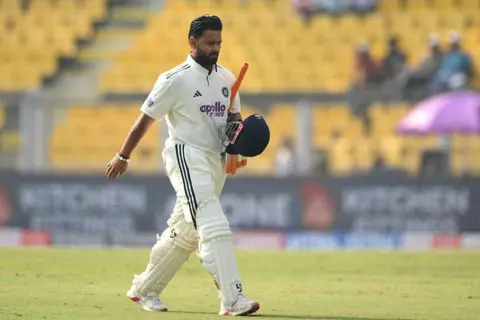
India's unexpected 0-2 loss to the Proteas in the just finished red-ball series has sent shockwaves through the squad.
In the final match, the visiting team gave India a record Test defeat by runs, against all odds. It marked South Africa's maiden series victory in India in 25 years and India's another home failure in just 12 months after a 12-year invincible streak.
The momentum gained during the previous half-year has almost disappeared and the prospects of multiple squad members - including head coach Gautam Gambhir - are under scrutiny.
A Promising Start Vanishes
The emerging side's commendable display in England this summer, under a different skipper, suggested a seamless changeover after the near-simultaneous retirements of veterans Ashwin, Rohit Sharma, and Virat Kohli.
A straightforward 2-0 triumph over the Windies at the start of the home campaign strengthened that view, before the South Africans turned up and handed out a crushing loss.
India were somewhat unlucky that captain Shubman Gill was injured very early in the initial match and took no further part in the series. Yet that fails to account for the squad of the terribly sub-par performance in both Tests against the opposition.
Several established players suffered, and several players hoping for long red-ball careers were exposed as not yet good enough - in skill or mindset - for the format.
A Troubling Pattern
This was the second clean sweep in home conditions experienced by India in just a year. In 2024, unfancied New Zealand had secured a staggering 3-0 victory which effectively cost India a spot in the World Test Championship (WTC) final.
The fresh failure to the Proteas risks harming India's chances of reaching the decider of this edition also.
From number three in the WTC table ahead of the matches, the side have dropped to fifth place. Though nine additional matches are yet to be played, five of these are against Australia. Ordinarily, performing in familiar conditions would be a significant benefit - even when facing the powerful Australians. But the disasters against New Zealand and the Proteas offer no room for such comfort.
Roots of the Decline
The national team's weakness in Test cricket has been significantly highlighted. Nevertheless, the reason India have struggled so much in Test matches at home lately is remains puzzling.
Since the turn of the century, India were regarded as unbeatable in red-ball cricket at home. In hot, humid conditions and on surfaces that assisted spinners and suited their batsmen and bowlers, the hosts dominated all comers. The occasional loss, like in the 2012-13 season against the English, was considered an anomaly.
Currently, the team look to be beatable at home.
Against the Kiwis in last year and the Proteas this year, India were defeated by their own tactics. The pitches they developed to help their style went wrong completely, as the opposition capitalized on them more skillfully, surpassing the home team's players when it was most crucial.
The Core Issue
A few experts argue that the Indian team is failing in home conditions because domestic pitches have been modified from turners to pace-friendly pitches to train the squad to do well abroad.
Others highlight that the IPL, in which numerous foreign cricketers take part, has removed the mystery and hardship subcontinental pitches would challenge them with earlier.
While there is validity in these views, it fails to account for the reason the team's showings on home soil have witnessed such a sharp fall.

Various Shortcomings
The majority of ex-cricketers point to a complex, multi-headed problem, not limited to one or two factors.
Critics and players have pointed to several failings post India's humiliating loss to the Proteas: underestimating the opposition, inadequate readiness, poor choices, overconfidence, constant chopping and changing of the starting eleven, and prioritising limited-overs over the longer format.
This was obvious in the showings of the team.
Players like Rishabh Pant and Jaiswal, of whom high hopes were held, suffered for their lack of application, while Sudarshan, Nitish Kumar Reddy, and Jurel - who were looking to cement their position in the squad - came up short in skill and mindset, paying a heavy price for their casual attitude.
Only a handful - Ravindra Jadeja, Bumrah, Kuldeep, Mohammed Siraj and Sundar - did justice to their ability and standing - but not sufficiently to secure victories.
Management Questions
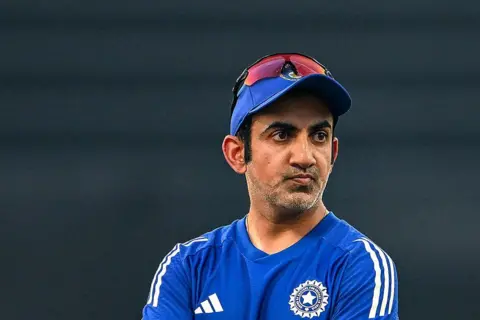
The analysis didn't spare just the players - team selectors and coaching staff were also criticized, fuelled by disappointed supporters and critical former players. At the centre of the scrutiny was team coach Gautam Gambhir.
At his post-series press
